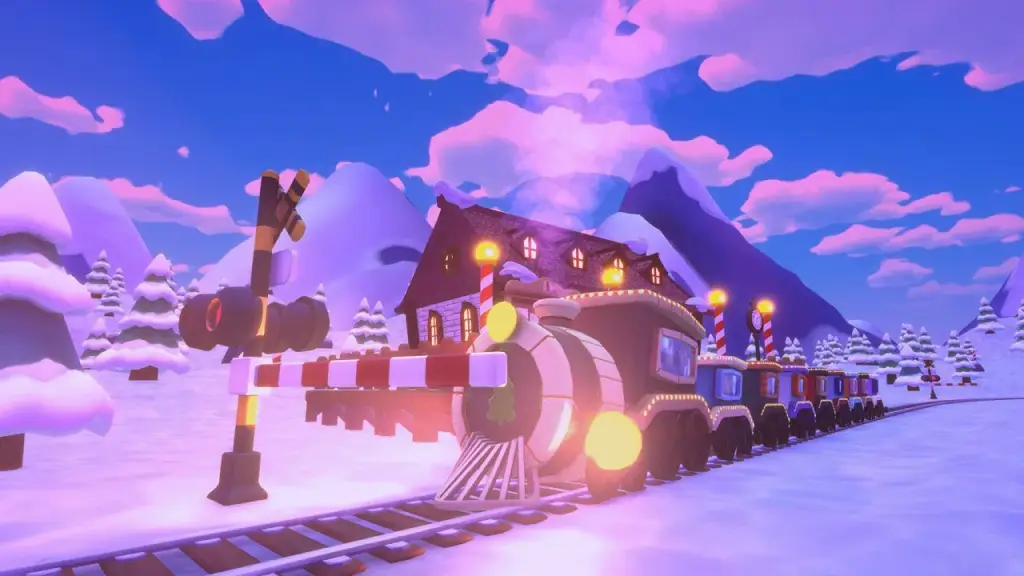



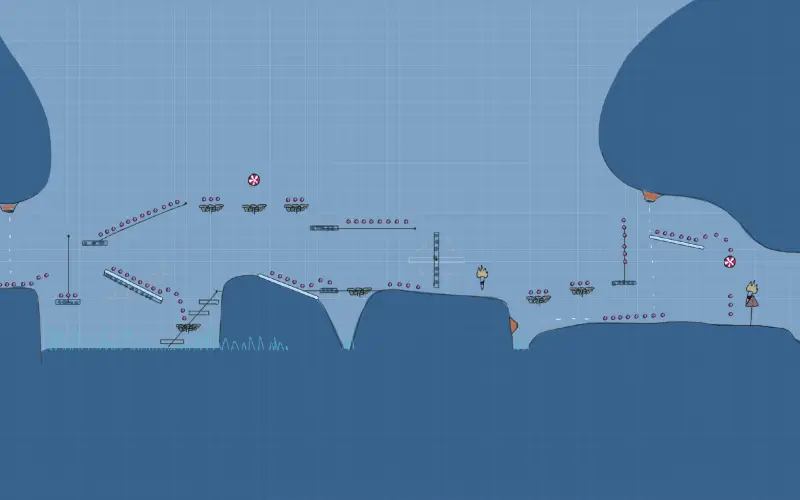
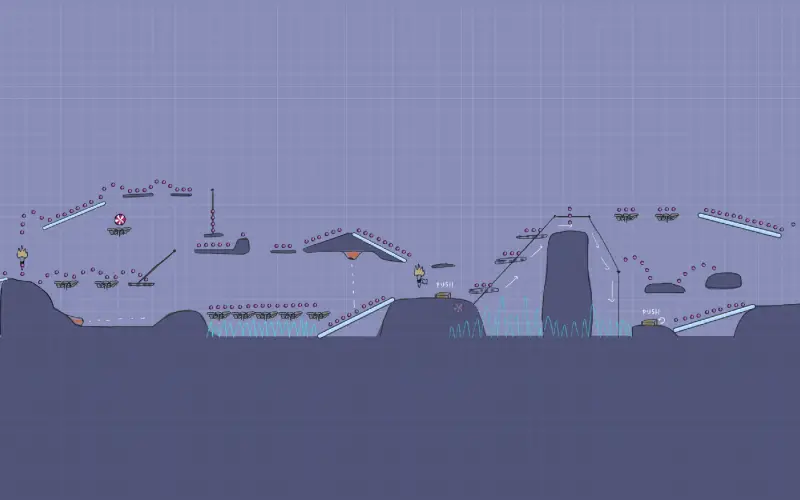
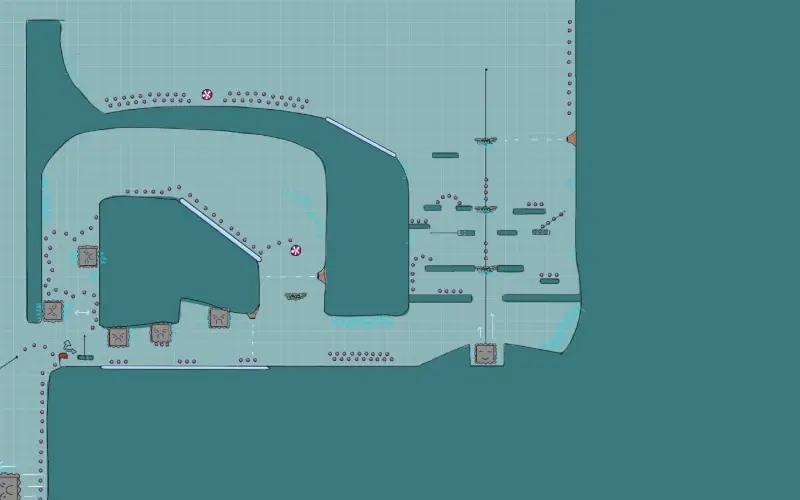
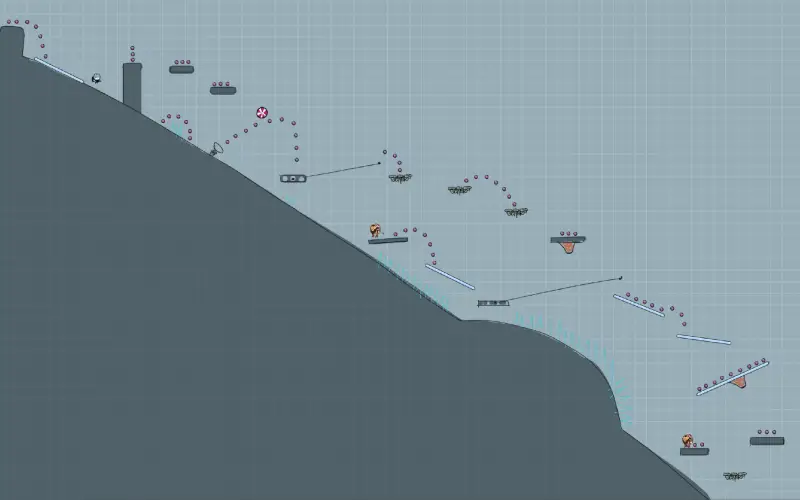
While working at Denda Games, I developed five 2D platforming levels that focused on rhythmic traversal.
I started my design proecess by sketching each level separately, focusing on a balanced, but increased difficulty curve as the game progressed.
Considering the young target audience (3+), I designed a simple main path. For experienced players I created more challenging alternative routes, rewarding them with faster completion times.
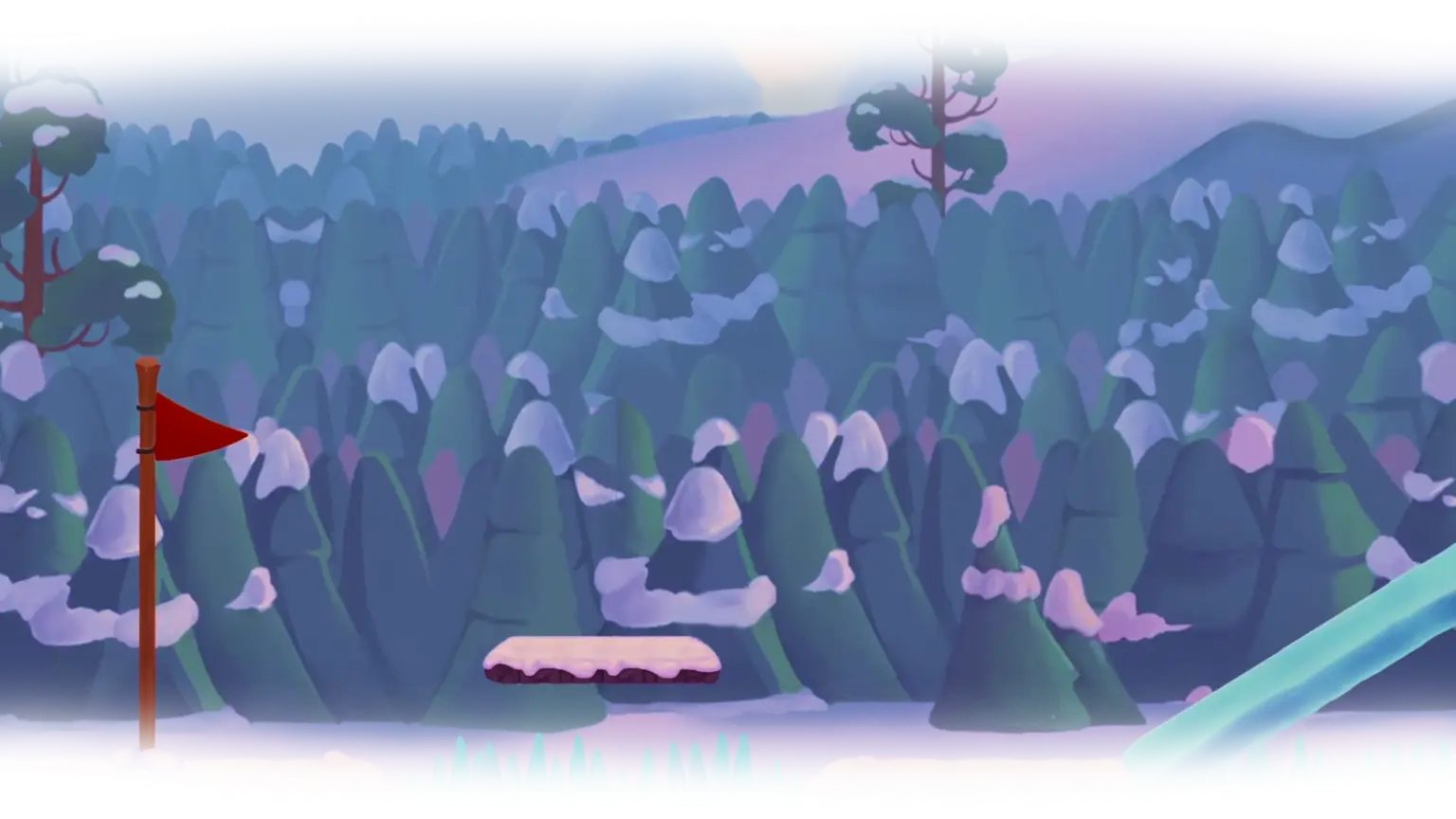


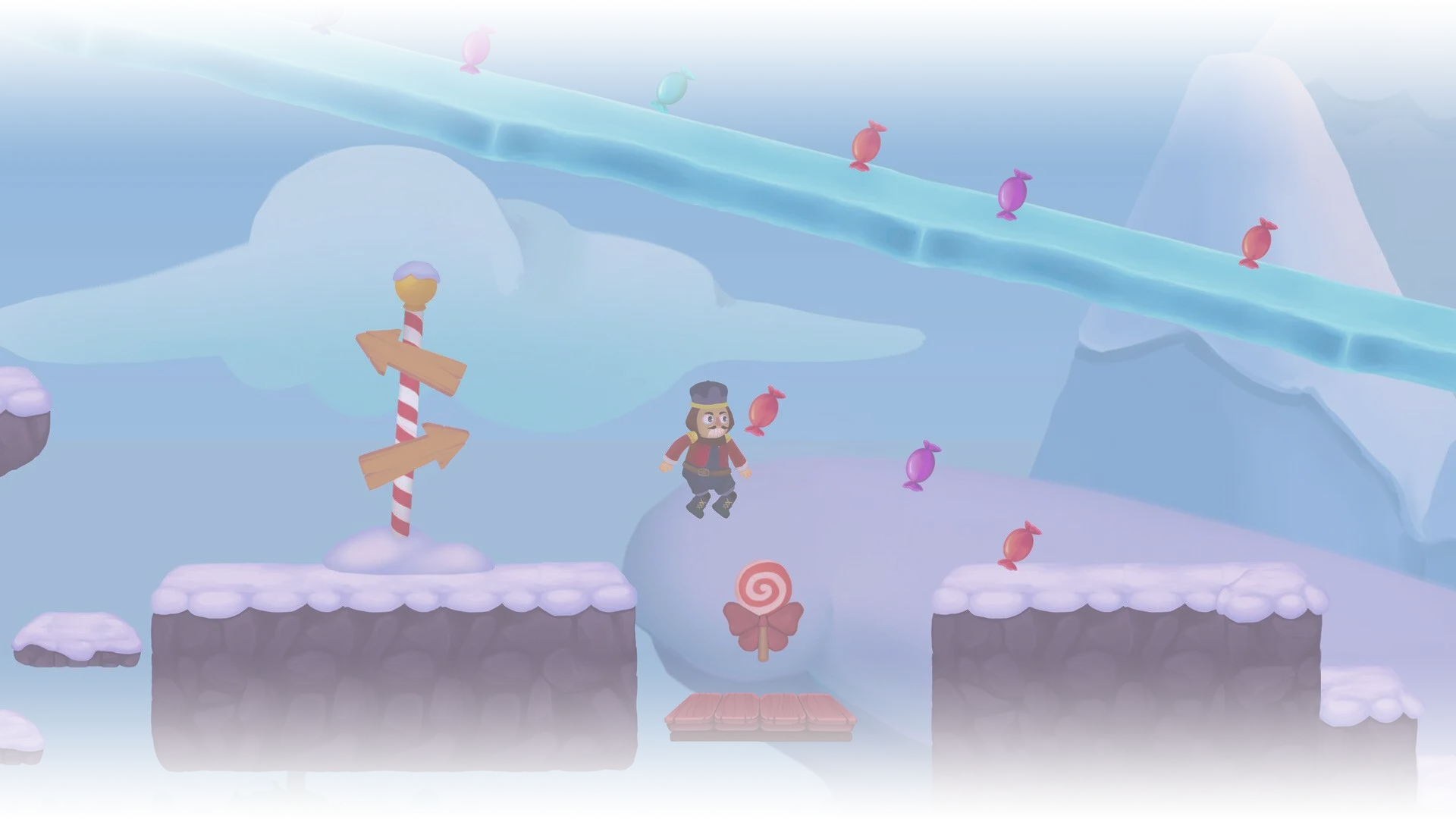
Without relying on heavy tutorials, I worked with artists to integrate signs directly into the world. These would show players different paths they could take and mark hazard zones.
By placing collectibles, I could dictate different traversal methods, creating a trail players could follow. This design not only rewarded rhythmic locomotion, but also drew the attention toward hidden or elevated areas.
To introduce mechanics, I created mandatory sections where players must use the skill to progress in a zero-risk environment.
Prioritizing organic learning, I onboarded each mechanic following a structured approach:
My design philosophy focused on creating opportunities in which mechanics complement each other. They should not be experienced in isolation, but rather as connected parts of an intricate world.
Using physics-based interactions, I designed versatile mechanics. For example, a moving platform is a traversal tool, but it also functions as a shield to block projectiles.
Setting platform collision to share the same layer as the combat-related objects, I allowed players to develop defensive playstyles by using their surroundings.
To encourage strategic decision-making, I implemented destructible blocks. Players could either break the cubes to open their path or use them as a climbing platform.
I built each level on a simple base, allowing casual players to complete a linear path with minimal hazards.
Rather than just increasing hazard count, I scaled difficulty by creating more complex mechanic combinations, requiring mastery of each skill,
To balance high-intensity sections, I added frequent checkpoints which would give players full health points upon respawning.
I designed the final level of the game to encourage players to use every skill they learnt in a fast-paced environment.
By combing known mechanics in different setups, I created a steep but fair difficulty curve that rewards players' mastery.
Working on this game taught me to adapt designs for different audiences. Creating accessible levels for younger players helped me overcome my experience bias.
As the only designer on the project, I took full ownership by directing art decisions to meet gameplay needs. I balanced design requirements with the project budget, prioritizing asset reusal when possible.