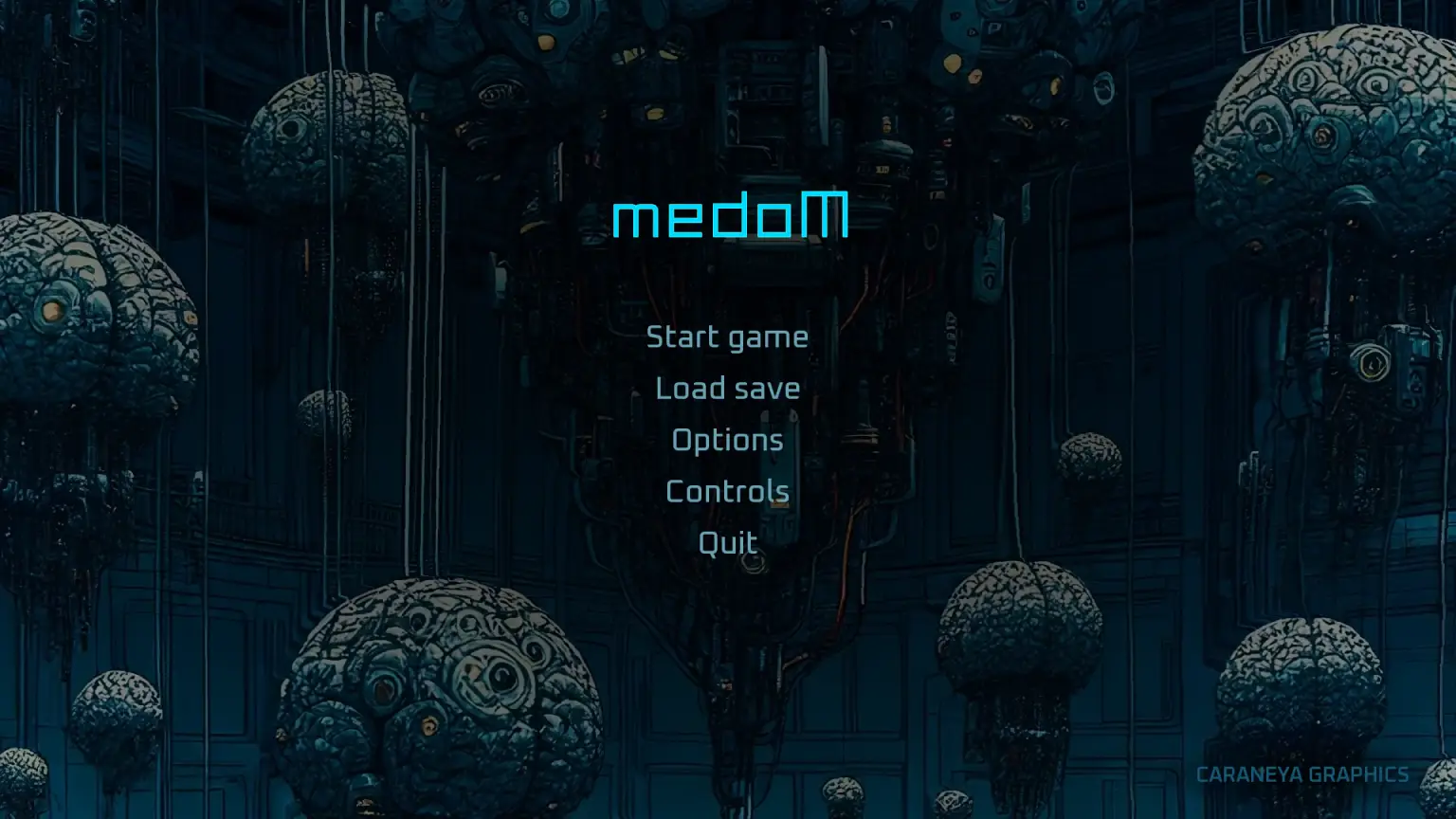



To exercise my narrative skills, I developed medoM, a text-based adventure combined with visual novel elements and puzzle mechanics.
As my focus was on developing a comprehensive branched story while learning RenPy, I used AI-generated visuals to complement the narrative.
Developed over a full six-month cycle, medoM explores the tragic journey of a robot experiencing deviant behavior, splitting each choice the player takes into one of the two conflicting sides: man versus machine.

Researching tragic storytelling, I created a memorable narrative that relied on building hope only to have a more impactful climax.
I scripted unique NPCs using personality trackers. This requires players to build rapport to unlock deeper dialogue and story paths.
I mapped all branching narratives using Draw.io diagrams, resulting in complete player flows that span across seven chapters. All choices feed into a scoring system that impacts the game's ending.
medoM uses a "Tracking the State of Play" method with the current state of variables impacting the world even after the player rejoins a main branch.
To track the states of each character or personificated robot element, I developed a structured variable library.
Using these references, I could easily program complex narrative conditions when skill checks were required to progress the story.
I recreated tension and uneasiness through futuristic colors, mechanical sounds and visual effects.
As the player's deviant score was increasing, each interaction I designed had to scale similarly. I added glitch VFX for intense decisions. By animating interactions closer to the player's view, I created a more immersive experience.
I contextualized the player's thoughts by using robotic parts to outline the internal conflict. This allowed players to opt for the thoughts that aligned with their playstyle, increasing agency in the story progression.


I designed puzzles as a way to progress the story and break the heavy-dialogue pace, using Python programming to create custom interactions.
To contextualize each puzzles, I implemented thematic actions such as repairing circuits and Captcha tests.
Several puzzles allow for multiple solutions, which adjust the robotic nature variables, binding together levels with narrative.
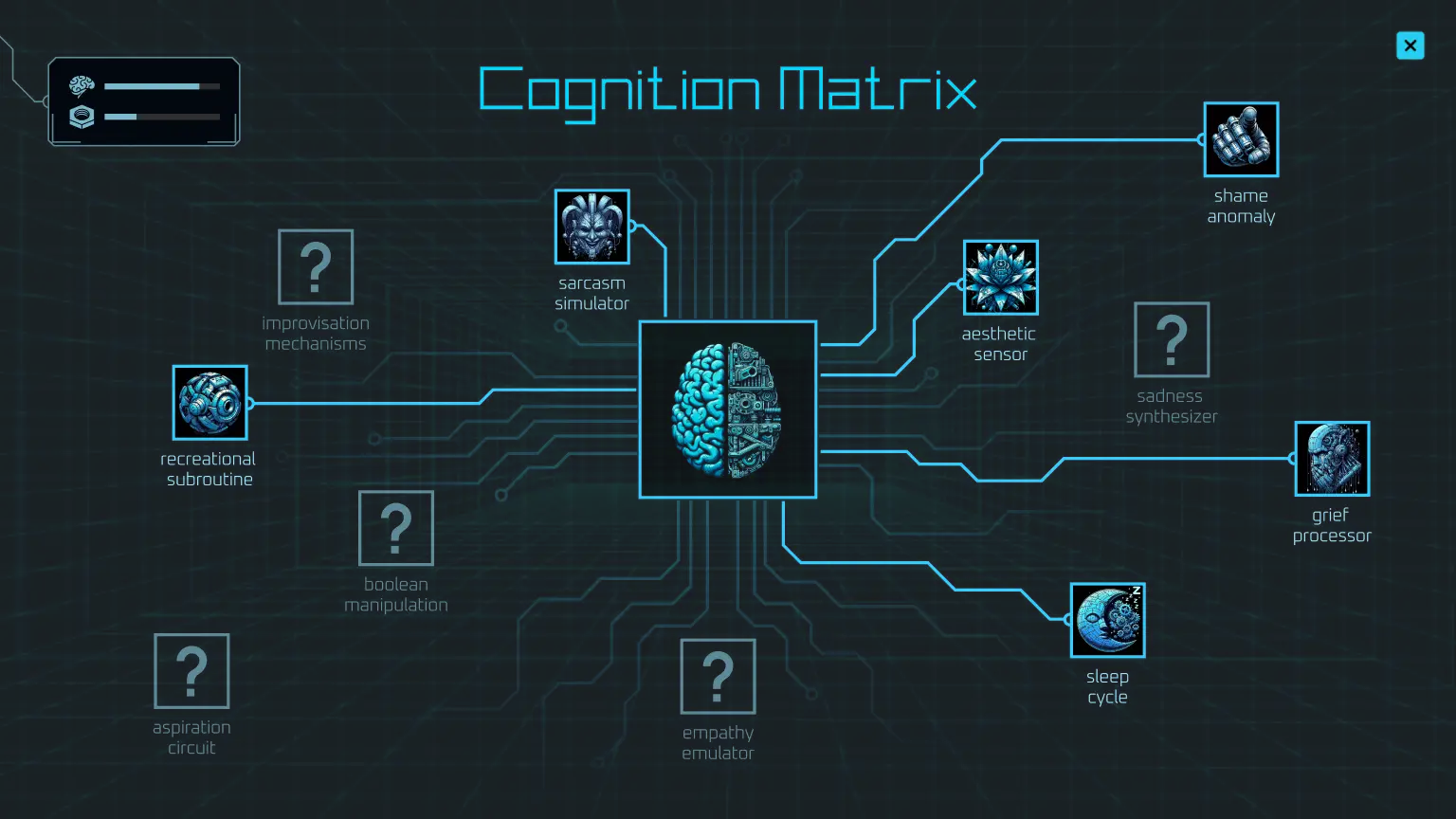
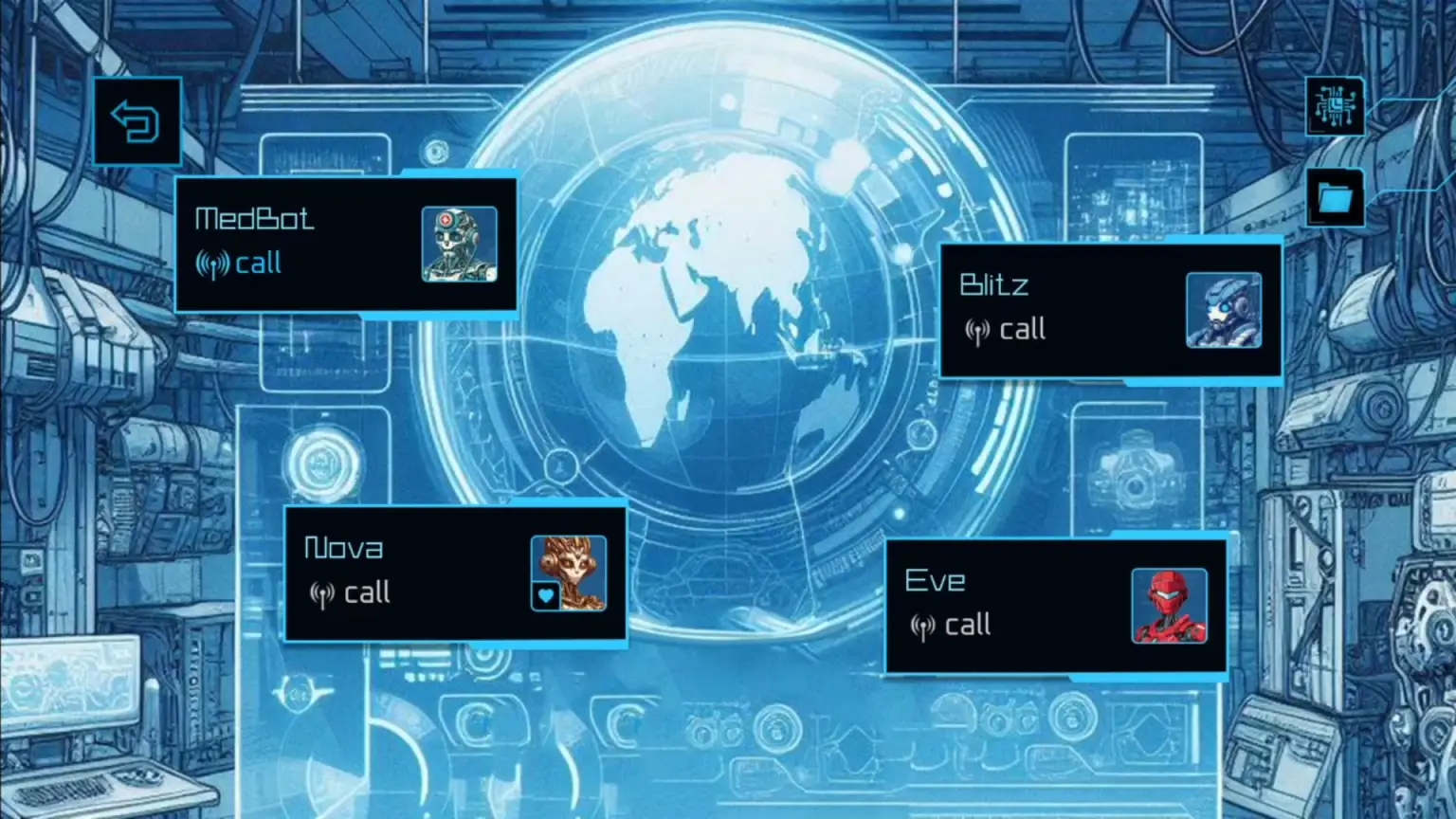
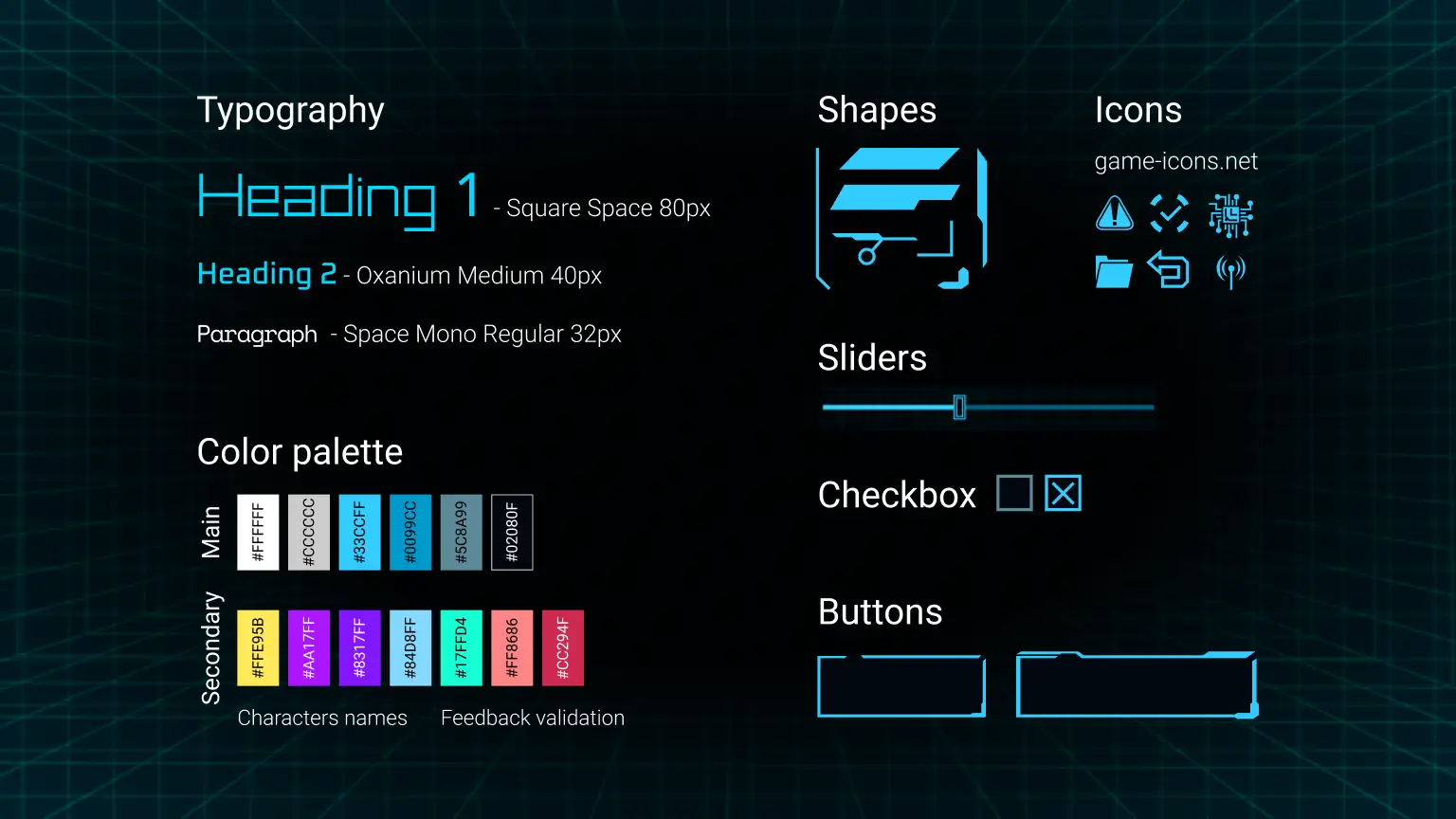
Given the game's atmosphere, UI elements were present everywhere, from HUD that tracked mission progress to in-game screens that appeared when players interacted with various objects.
I designed a skill tree that communicated the player's deviant tendency. Each branch represents a part of a circuit, splitting the screen to show the balance between human and robot factors.
I contextualized the mission tracker by designing it as a Task Manager screen. Opting for a clean design with two rows, players could easily see their pending and completed tasks.
I adapted the existing RenPy dialogue containers, using technical boxes with sharp angles and contrasting blue outlines for a futuristic aesthetic.
I connected the name labels with the dialogue boxes using cybernetic branches to maintain a technical aesthetic.
I implemented timed decisions, placing the timer bars directly next to the choices to increase readability and faster answer selection.
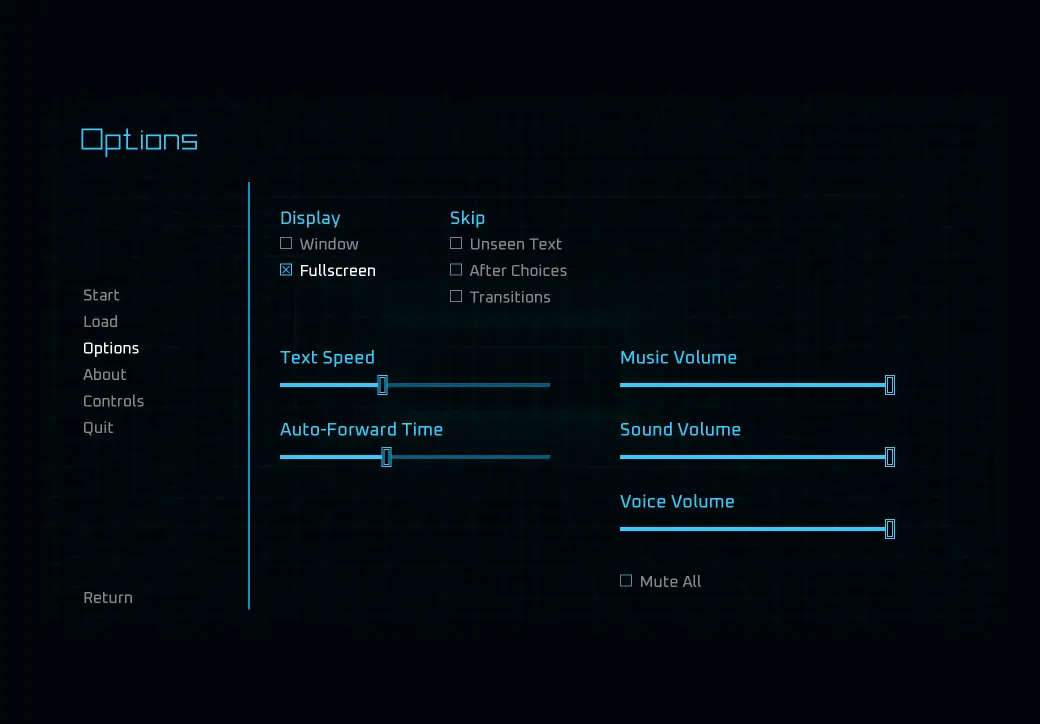
I extended the game's visual identity to the Main Menu and Pop-up screens to create an immersive atmosphere from the moment players open the game for the first time.
I selected font pairings relevant to the function each element had:
To convey emotion and tonality (whispering, shouting or fear), I implemented dynamic text tags that animate words. These effects added another layer of narrative subtext to standard dialogue blocks.
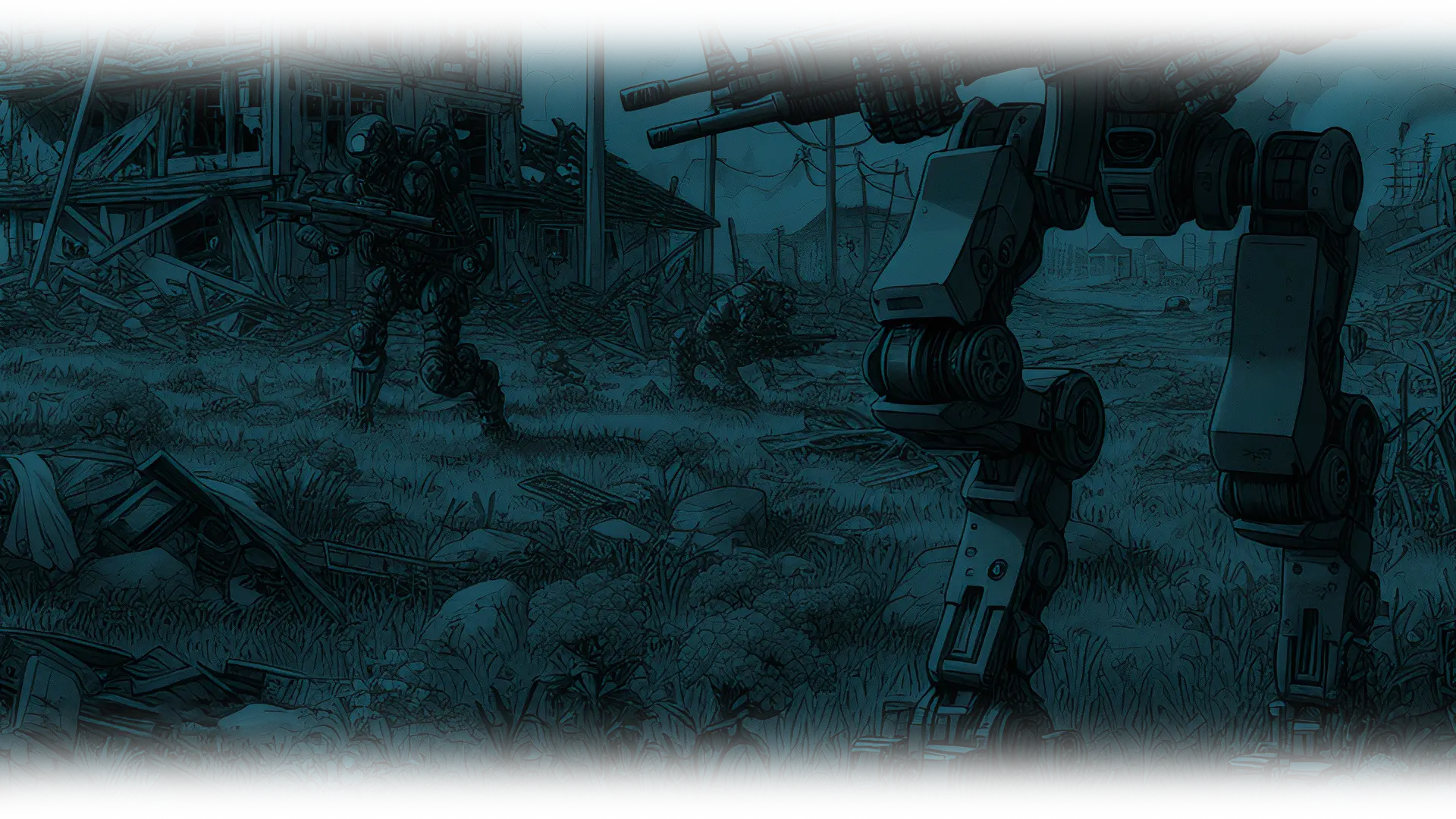
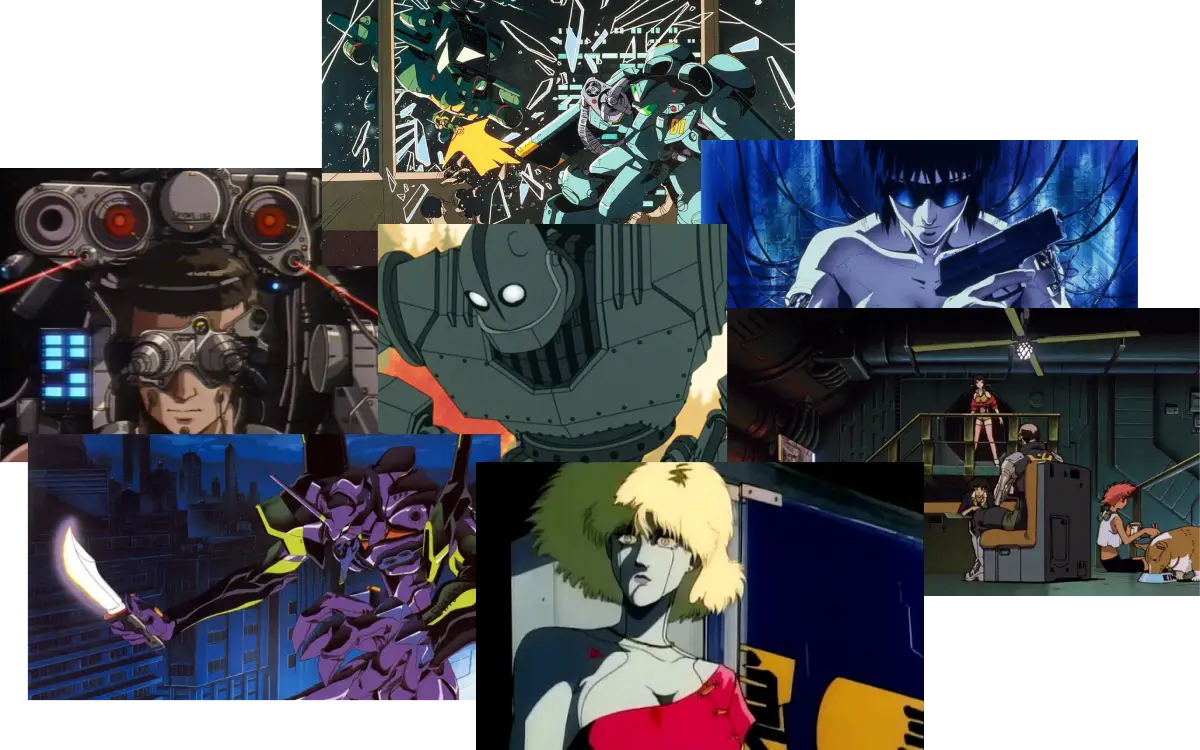
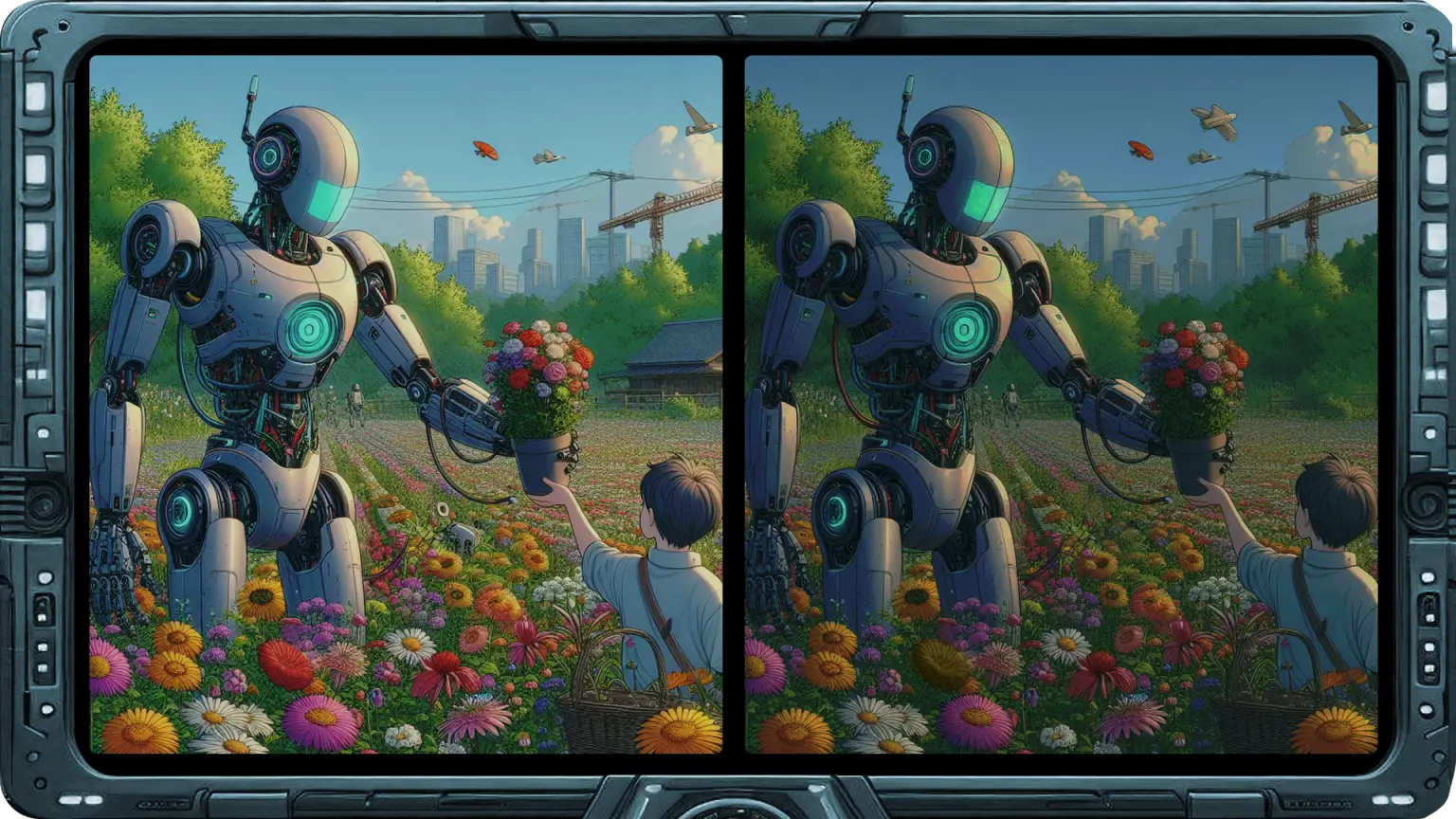
I based medoM's visual identity on old cyber anime styles, characterized by grainy texture, blue tones and mechanical looks.
Using DALL-E image generation, I used various prompting techniques to mitigate inherent biases in the character creation. I managed to create consistent visual styles, using AI as a concepting tool and then refining the assets in Photoshop.
Starting from the generated characters, I created framed animations from idle to walking by moving the body parts and drawing various facial expressions.
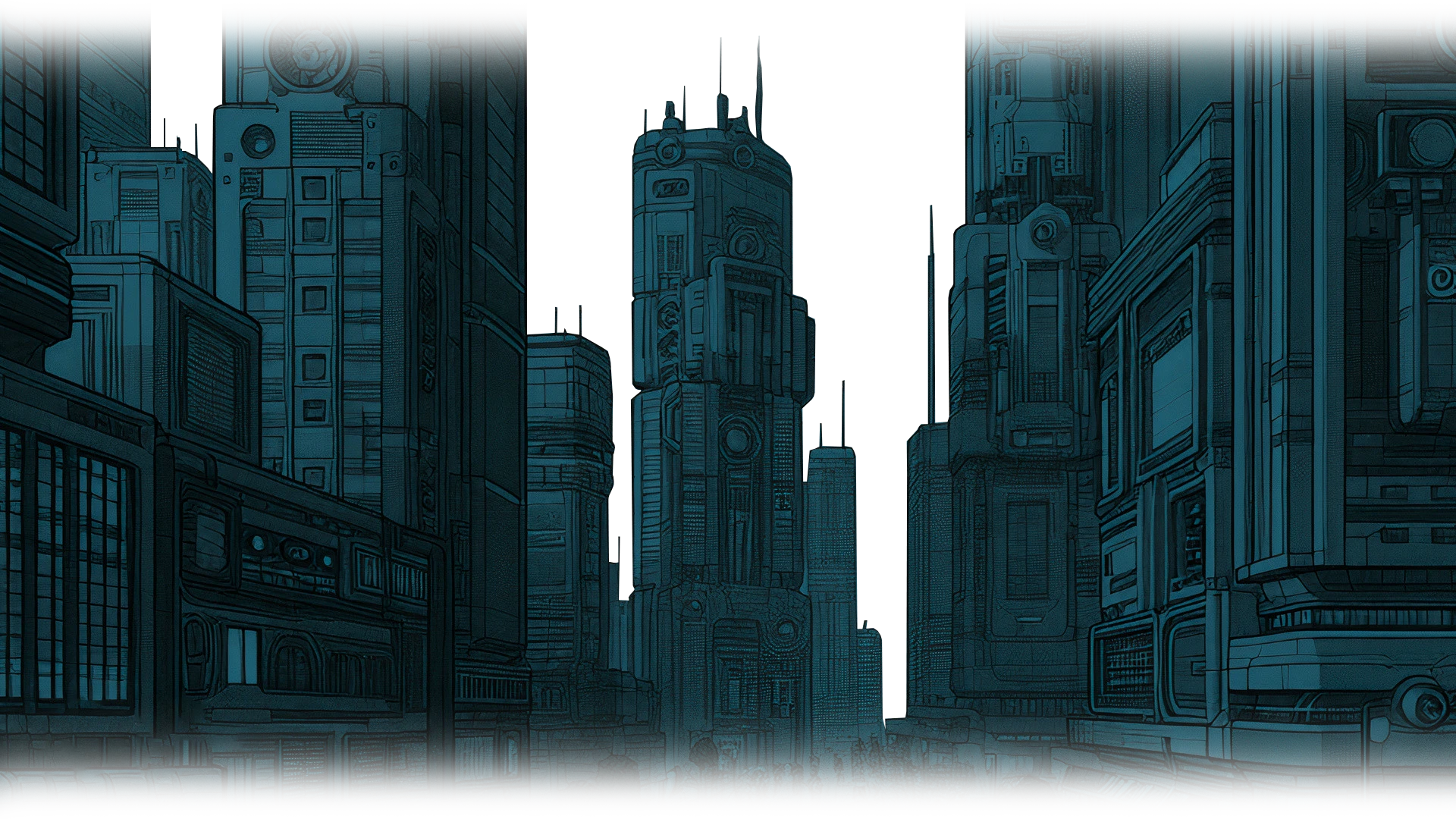
For backgrounds and splash-screens, I created a Photoshop template to apply similar visual effects and post-processing, blending each generated asset into a single thematic style.
Developing modeM over a period of 6 months while learning a new game engine was challenging.
Using AI-assets I managed to focus my attention on writing a complex storyline and implementing over 100 dialogue choices in RenPy.
Passionate about writing, I prioritized storytelling over coding, which resulted in some redundant script structures. This outlined the importance of a strong theoretical foundation before diving into implementation.
With more development time, I would expand medoM's environmental storytelling by adding more non-linear exploration and interactable objects. By doing this, I would give the players the option to uncover the story organically with less dialogue-based interactions.